Calculus Volume 2 · free preview
Chapter 4 Unit Exam. Integration Techniques, Applications and Differential Equations
Unit exam covering the course so far. Integration Techniques, Applications and Differential Equations.
1. How this assessment works
This lesson is a curated assessment adapted from MIT OpenCourseWare 18.01 Single Variable Calculus (Fall 2006), supplemented by a university mathematics question bank (https://ocw.mit.edu/courses/18-01-single-variable-calculus-fall-2006/), used under CC BY-NC-SA 4.0 for the MIT items. Work through the 6 problems in order, for each problem, type your reasoning in the answer box or write it on the handwriting pad, then submit it for AI grading.
How the grading works Every problem is graded by an AI mathematics teacher that reads the official solution shipped with the course. It checks your work criterion by criterion, awards partial credit for correct steps, and returns written feedback. Equivalent mathematics and valid alternative methods are accepted, a different route to the same result can still earn full marks.
If your answer is incomplete, the feedback names exactly which steps are missing, so you can correct them and try again.
2. Problem 1, Two ships at right angles
One ship is sailing east at 60 km an hour and another is sailing south at 50 km an hour. The slower ship crosses the path of the faster ship at noon when the faster ship was there one hour earlier. Find the time at which the two ships were closest to each other.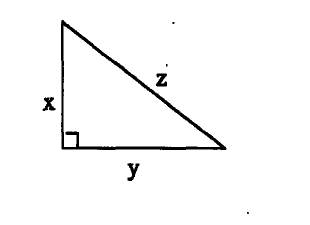
3. Problem 2, Counting the zeros of $2x - 4 + \frac{1}{(x-1)^2}$
Graph the function
In particular, count how many times vanishes. (In math jargon, "vanishes" means , not . Another name for the values of at which is "the zeros" of .) Give reasons, based on the sign of , that the zeros you have found must be there and that there cannot be any more. (For example, "There must be exactly one zero in the interval because...")
4. Problem 3, Cylindrical beakers within 10% of the least glass
a) Suppose that a company manufacturing cylindrical beakers (of uniform thickness on the bottom and the sides) is willing to use up to 10 percent more glass than the minimum required to hold a particular volume. What proportions are permitted? (You will need to use Newton's method.)
b) What is the connection with Problem 2C-5?
5. Problem 4, Area between two curves
Find the area between the following curves.
a) and
b) and ; assume
c) and
d) and the -axis.
6. Problem 5, Volume of a pyramid by slicing
Show that the volume of a pyramid with a rectangular base is , where is the area of the base and is the height. (Show in the process that the proportions of the rectangle do not matter.)
7. Problem 6, A region sliced into shells
Find the volume of the region , revolved around the -axis.
Practice this interactively
Free account · instant grading · spaced review that schedules itself.
Start this course for free